Jinko 650W Bifacial vs 550W Panels for Commercial Rooftops in Africa: A Worked Cost Example
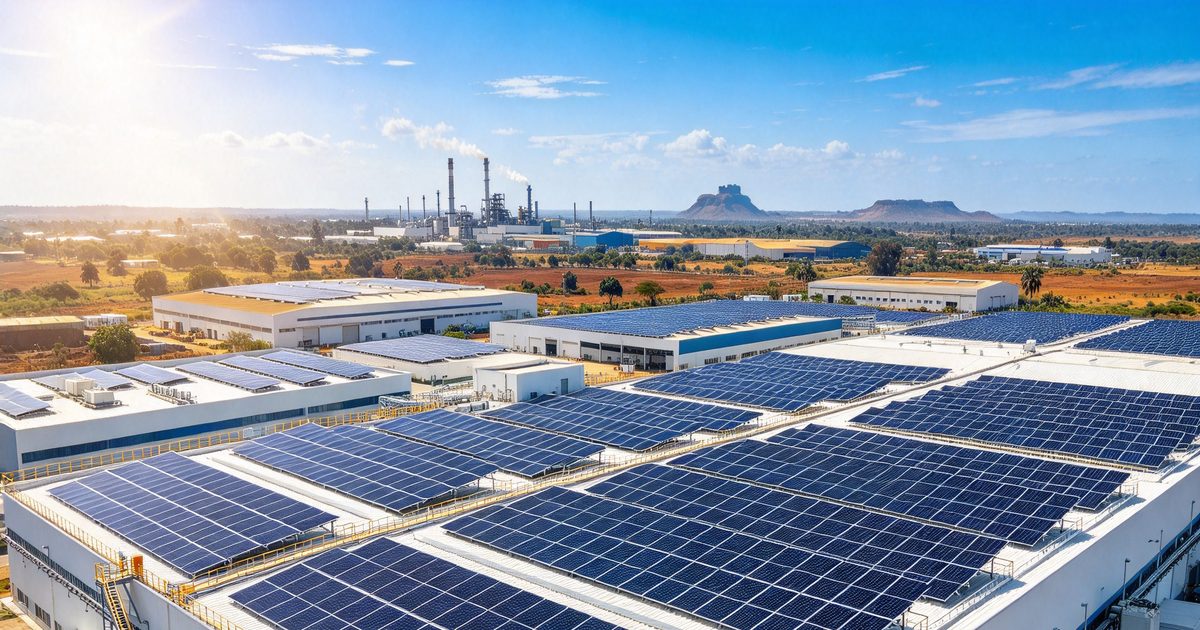
Factories, warehouses and cold stores across Africa are adding rooftop solar to cut diesel and grid costs. A common question from buyers is whether a large-format N-type bifacial module such as the Jinko Tiger Neo 650W is worth paying more per watt than a standard 550W panel.
The short answer: on a light-coloured roof with enough space, usually yes. The higher module price is partly offset by fewer panels, less racking and less labour, and the bifacial rear side adds free generation. Below is a worked example for a 500 kW rooftop. The numbers are typical planning assumptions, not measured results from one site, so use them as a starting point for your own quote.
The Module: Jinko Tiger Neo 78HL4-BDV
- Power range: 625W to 650W
- Module efficiency: up to 22.9%
- Cell technology: N-type TOPCon with HOT 3.0
- Construction: bifacial, dual glass
- Warranty: 30-year linear power warranty
N-type TOPCon modules lose less power in heat than older P-type PERC modules. On African rooftops, where module temperatures often reach 60°C or more at midday, that difference shows up directly in daily yield.
Example Project: 500 kW Factory Roof in Lagos
Assumptions for the comparison:
- System size: about 500 kW DC
- Roof: flat industrial roof with a white or light grey membrane
- Location: Lagos, Nigeria, about 5 peak sun hours per day on average
- Option A: 550W monofacial PERC modules
- Option B: Jinko Tiger Neo 650W bifacial modules
Panel Count and Balance-of-System Savings
- Option A needs about 910 modules of 550W
- Option B needs about 770 modules of 650W
- That is roughly 140 fewer modules, about 15% less
Racking, clamps, DC cable runs and installation labour all scale with the number of modules rather than with watts. On a typical commercial project, those savings cover a meaningful part of the higher module price. Fewer modules also means fewer connectors to inspect and fewer panels to clean over the life of the system.
How Much Does Bifacial Add on a Roof?
Bifacial gain depends mainly on how much light the surface under the modules reflects and on how high the modules sit above it.
- White membrane or white gravel: about 10% to 20% extra
- Light grey concrete: about 6% to 10% extra
- Dark roof or dark soil: often under 5%
On a white roof, raising the rear edge of the modules and leaving space between rows increases rear-side gain. If the roof is dark, a monofacial module may give better value.
Heat Performance
At a module temperature of 60°C, an N-type module with a temperature coefficient of about -0.30%/°C loses around 10.5% of its rated power. A PERC module at about -0.35%/°C loses around 12.3%. That difference of roughly 2 percentage points applies every sunny afternoon for the life of the system.
Indicative Economics
For planning, a 500 kW system on a light roof in Lagos with 650W bifacial modules can be expected to produce roughly 10% to 15% more energy per year than a 550W monofacial system of the same DC size, once bifacial gain and better heat performance are combined.
At a commercial tariff around USD 0.12 to 0.15 per kWh, or where the alternative is diesel generation, that extra energy is usually worth much more each year than the price difference between the two module types. In many cases the extra cost of the 650W option is recovered within the first one to two years, and the overall system payback falls in the range of 2 to 4 years. Always confirm with a site-specific yield simulation before committing.
When to Choose 650W Bifacial
- Light-coloured roof or ground surface
- Large roof area with simple, regular layout
- High daytime consumption, such as factories, cold stores and shopping centres
- Expensive grid power or diesel backup
When a Standard Module May Be Better
- Dark roof surface where bifacial gain is small
- Small or irregular roofs where large-format modules are hard to fit
- Roofs with limited load capacity, since dual-glass modules are heavier
- Installers without equipment for handling large modules safely
Practical Tips for African Rooftops
- Check the roof structure and confirm it can take the module weight plus racking and wind loads
- Plan cleaning every 1 to 3 months in dusty seasons such as the Harmattan in West Africa
- Design string lengths for the coldest morning temperature so open-circuit voltage stays below the inverter limit
- Use suitable cable sizes for the higher current of large-format modules
Get a Quote
We supply Jinko Tiger Neo 650W bifacial modules and other Jinko, LONGi, JA Solar and Trina panels to Nigeria, Kenya, Ghana, South Africa and other African markets. Send us your roof size, location and electricity bill and we will help you compare options and prepare a quotation.
Need help choosing the right solar panels?
Our team can help you find the best solution for your project. Contact us for a free consultation.
Contact Us