Jinko 620W 66-Cell Solar Panel (Tiger Neo 66HL4M): Buyer Guide for Africa and the Middle East
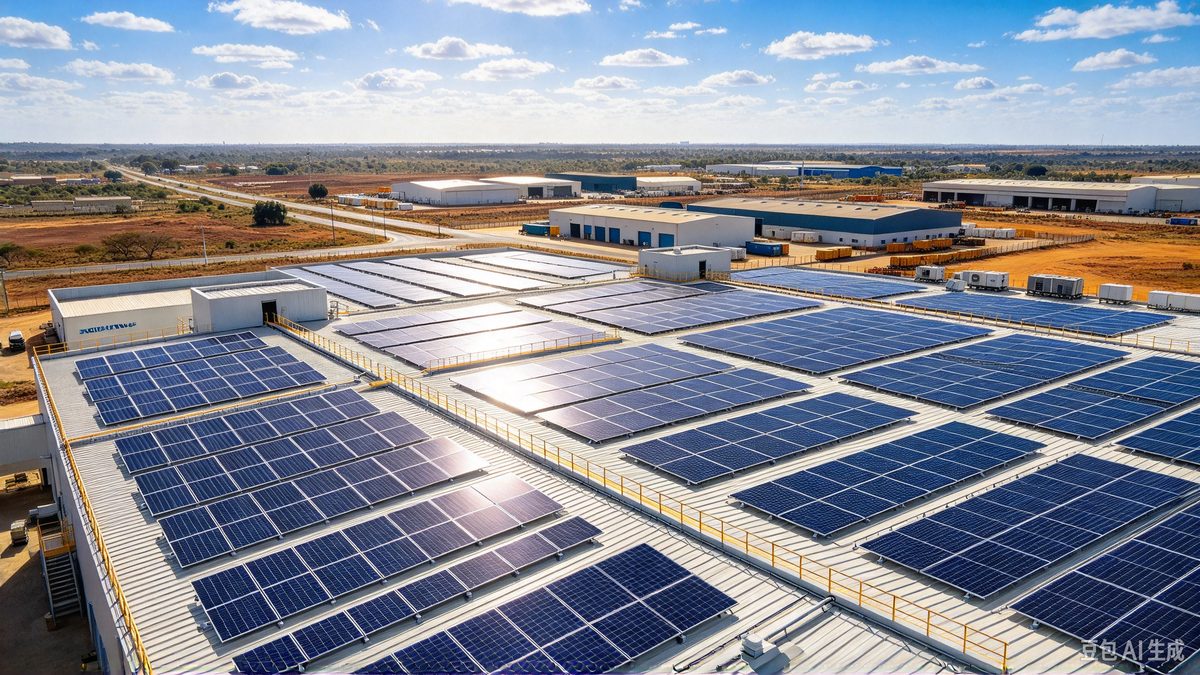
The Jinko Tiger Neo 620W 66-cell module has become one of the most requested panels from our customers in Africa and the Middle East. It sits between the older 550W class and the very large 650W to 720W utility modules, and that middle position is exactly why it works for so many projects: factory roofs in Lagos, farms in Kenya, villas and car parks in Dubai, and ground-mounted plants in Saudi Arabia and Egypt.
This guide explains what the 620W 66-cell panel actually is, what the datasheet says, how it behaves in heat, dust and salt air, and how to choose between the bifacial and monofacial versions. All technical figures below come from the official Jinko datasheets for the 66HL4M-BDV (F3) and 66HL4M-(V) (F2). Any yield or cost figures are planning assumptions and are clearly marked as such.
**Need a quote for your project?** Contact us on WhatsApp for fast response and pricing.
What "620W 66-Cell" Means
The 66HL4M uses 132 half-cut N-type cells arranged as 66 × 2. In older terms this is a "66-cell" module. It uses rectangular cells, so the panel is wider than a classic 72-cell module but shorter than a 78-cell module.
Jinko makes two versions of this panel:
- Tiger Neo 66HL4M-BDV: bifacial, dual glass, 605W to 630W
- Tiger Neo 66HL4M-(V): mono-facial, single glass with backsheet, 610W to 635W
The 620W rating exists in both versions, so the first decision for a buyer is not the power class but whether the site benefits from bifacial generation.
Datasheet Specifications at 620W
Tiger Neo 66HL4M-BDV 620W (bifacial)
- Dimensions: 2382 × 1134 × 30 mm
- Weight: 32.4 kg
- Front glass: 2.0 mm with anti-reflection coating
- Back glass: 2.0 mm heat-strengthened glass
- Maximum power voltage (Vmp): 40.74 V
- Maximum power current (Imp): 15.22 A
- Open-circuit voltage (Voc): 49.08 V
- Short-circuit current (Isc): 16.08 A
- Module efficiency: 22.95%
- Bifaciality: 80% ±5%
- Power at BNPI (rear irradiance 135 W/m²): 685W
- Maximum series fuse rating: 35 A
- Packing: 36 pcs per pallet, 720 pcs per 40'HQ container
Tiger Neo 66HL4M-(V) 620W (mono-facial)
- Dimensions: 2382 × 1134 × 35 mm
- Weight: 28.2 kg
- Front glass: 3.2 mm low-iron tempered glass with anti-reflection coating
- Maximum power voltage (Vmp): 40.90 V
- Maximum power current (Imp): 15.16 A
- Open-circuit voltage (Voc): 48.95 V
- Short-circuit current (Isc): 16.15 A
- Module efficiency: 22.95%
- Maximum series fuse rating: 30 A
- Packing: 31 pcs per pallet, 620 pcs per 40'HQ container
- Extra rating: high salt mist and ammonia resistance
Shared Specifications (both versions)
- Cell type: N-type TOPCon monocrystalline with Jinko HOT 3.0 and SMBB
- Power tolerance: 0 to +3% (no negative tolerance)
- Temperature coefficient of Pmax: -0.29%/°C
- Temperature coefficient of Voc: -0.25%/°C
- Temperature coefficient of Isc: +0.045%/°C
- Operating temperature: -40°C to +70°C
- Maximum system voltage: 1500 V DC (IEC)
- Junction box: IP68; protection class II; connectors JK03M / MC4
- Cables: 4.0 mm², (+) 400 mm / (-) 200 mm or customised length
- Mechanical load: 5400 Pa front, 2400 Pa rear (static test load)
- Warranty: 12-year product warranty, 30-year linear power warranty
- Degradation: 1% in year one, 0.40% per year after, 87.4% guaranteed at year 30
- Certifications: IEC 61215:2021, IEC 61730:2023, IEC 61701 (salt mist), IEC 62716 (ammonia), IEC 60068 (sand and dust), IEC 62804 (PID)
Two points matter most for buyers in hot, dusty regions. First, IEC 60068 sand and dust testing and IEC 61701 salt mist testing are directly relevant to desert and coastal sites. Second, the 0 to +3% tolerance means you never receive less than the nameplate power.
Why N-Type TOPCon Matters in Hot Climates
Every solar panel loses power as it heats up. In Riyadh, Kano, Khartoum or Muscat, module temperatures of 65°C to 70°C on summer afternoons are normal. The temperature coefficient tells you how much power is lost for each degree above 25°C.
- Typical P-type PERC module: about -0.34%/°C
- Jinko Tiger Neo 66HL4M: -0.29%/°C
At a module temperature of 65°C, which is 40°C above test conditions, a PERC panel loses about 13.6% of its rated power. The Tiger Neo loses about 11.6%. That 2-point difference repeats on every hot afternoon for the life of the plant, and the gap is widest in exactly the places where most of the energy is produced: the Gulf, the Sahel, North Africa and the Southern African interior.
N-type cells also avoid light-induced degradation (LID and LeTID), which is why Jinko can guarantee only 1% loss in year one and 0.40% per year afterwards. For a PPA or self-consumption project, slower degradation means more energy in years 10 to 30, when the system is already paid off.
Bifacial (BDV) or Mono-facial (V)?
The bifacial 66HL4M-BDV generates extra power from light reflected onto its rear glass. How much extra depends mostly on the surface below the panels and on how high the panels are mounted. Typical planning ranges are:
- White roof membrane or white gravel: about 10% to 15% extra
- Light desert sand, common in Saudi Arabia, the UAE, Egypt and Namibia: about 6% to 10%
- Light grey concrete: about 6% to 9%
- Grass or red laterite soil, common in West and East Africa: about 3% to 6%
- Dark roof sheets or dark soil: often below 3%
These are typical values, not guarantees. Higher mounting, wider row spacing and single-axis trackers all increase rear-side gain. Use a simulation tool such as PVsyst with your site albedo for a firm figure.
Choose the bifacial 66HL4M-BDV when:
- The project is ground-mounted on sand, gravel or light soil
- The roof is flat with a white or light membrane and the panels sit on tilted racks
- You are building carports, shade structures or agrivoltaic systems
- You want dual glass for long-term durability in desert sand and humidity
Choose the mono-facial 66HL4M-(V) when:
- Panels are flush-mounted on a pitched metal roof, where the rear side receives almost no light
- The roof has limited load capacity (28.2 kg versus 32.4 kg per panel)
- The site is near livestock, poultry farms or fertiliser storage, where its ammonia resistance helps
- You want the highest front-side rating in the series (up to 635W) at a lower price per watt
String Sizing: Design for the Coldest Morning
Open-circuit voltage rises as the module gets colder. Even in hot countries, the highest string voltage occurs at sunrise on the coldest day of the year, not at noon in summer. Using the datasheet Voc of 49.08 V and the Voc coefficient of -0.25%/°C for the 620W bifacial module:
- Coldest module temperature 15°C (coastal West Africa, Gulf coast): Voc rises to about 50.3 V
- Coldest module temperature 0°C (inland Saudi Arabia, Egypt, Kenyan highlands): about 52.2 V
- Coldest module temperature -5°C (South African Highveld, Morocco's interior): about 52.8 V
From these figures, typical maximum string lengths are:
- 1500 V central or string inverter: 28 modules at 0°C, 29 modules at 15°C
- 1100 V commercial inverter: 21 modules at 0°C
- 1000 V inverter: 19 modules at 0°C
Use your site's actual record low temperature and leave a safety margin. Many designers choose one module fewer than the calculated maximum.
Check Inverter Input Current
Large-format modules carry more current than older panels. The 620W bifacial module has an Isc of 16.08 A at standard conditions, and at the BNPI rating with rear-side gain the datasheet lists about 17.8 A for the 685W bin. Older inverters with 13 A or 15 A per-input limits are not a good match. Choose inverters whose maximum short-circuit current per MPPT input is comfortably above the module Isc including bifacial gain. Most current-generation commercial and utility inverters are designed for this.
Container Loading and Logistics
For importers, the number of panels per container directly affects freight cost per watt:
- 66HL4M-BDV 620W: 720 pcs per 40'HQ, about 446 kWp per container
- 66HL4M-(V) 620W: 620 pcs per 40'HQ, about 384 kWp per container
A 1 MWp project needs about 1,613 modules at 620W. That fits into three 40'HQ containers in either version. The bifacial version leaves more room for spare modules, which we recommend at 0.5% to 1% of the order for long-life projects in remote areas.
Typical sea transit times from Chinese ports are around 20 to 35 days to East and West African ports and around 15 to 25 days to Jebel Ali, Dammam and Jeddah, depending on routing. Inland delivery to landlocked countries such as Zambia, Uganda or Mali adds time and cost, so plan the schedule before signing an EPC contract.
**Planning a solar project?** WhatsApp us now for shipping quotes and delivery timelines to your location.
Worked Example: 1 MWp Ground-Mounted Plant Near Riyadh
This example uses planning assumptions, not measured results. Use it to understand the method, then run a site-specific simulation.
- Module: Jinko Tiger Neo 66HL4M-BDV 620W
- Quantity: 1,620 modules, giving 1,004 kWp DC
- Strings: 60 strings of 27 modules on 1500 V inverters, maximum string Voc about 1,408 V at 0°C
- Freight: three 40'HQ containers
- Ground: light desert sand, fixed tilt, about 1.2 m lower-edge height
- Assumed specific yield before bifacial gain: 1,900 kWh per kWp per year
- Assumed bifacial gain on light sand: 7%
On those assumptions the plant produces about 1.91 GWh per year from the front side alone and about 2.04 GWh with bifacial gain included, around 130 MWh extra per year from the rear glass.
Compared with a 550W PERC design of the same DC size, the plant would need about 1,826 modules, roughly 200 more. Each extra module means more racking, clamps, cabling and labour. The better temperature coefficient of N-type cells adds further energy during the hottest hours of the Saudi summer.
Regional Considerations
Gulf Countries (Saudi Arabia, UAE, Oman, Qatar, Bahrain, Kuwait)
- Very high heat and strong sun: N-type temperature coefficient matters
- Sand and dust storms: plan for cleaning every 2 to 4 weeks during dusty months; robotic cleaning or water trucks for large plants
- Light desert sand: bifacial gain usually between 6% and 10%
- Regulatory: Saudi Arabia requires SABER conformity registration for imported PV equipment; UAE DEWA maintains an approved equipment list for Shams Dubai net-metering projects; check local requirements before ordering
- Grid connection: confirm the utility's LV and MV connection rules early, since they set the inverter and transformer choice
West Africa (Nigeria, Ghana, Senegal, Côte d'Ivoire, Benin, Togo)
- Coastal humidity and salt mist: choose IEC 61701 rated panels and corrosion-resistant mounting structures
- Harmattan season (November to March): very heavy dust, cleaning frequency often increases to weekly
- Variable grid quality: commercial and industrial systems usually include hybrid inverters and battery for backup during grid outages
- Regulatory: Nigeria requires SONCAP conformity assessment for imports; Ghana Standards Authority and similar bodies in other countries often require IEC test reports
- Typical tariffs: commercial grid electricity ranges from about USD 0.10 to USD 0.18 per kWh, and diesel generation costs much more, so solar payback is often under 3 years
East Africa (Kenya, Tanzania, Uganda, Ethiopia, Rwanda)
- Strong demand from farms, factories and commercial buildings; check the current duty and VAT treatment of solar equipment before pricing, as it has changed over the years
- Mix of on-grid and off-grid: large share of residential and farm systems run as hybrid with battery
- Cool highlands: string sizing must account for cold mornings in Nairobi, Addis Ababa and similar high-altitude sites (use 5°C or lower for maximum Voc calculation)
- Dust in the dry seasons and occasional hail in the highlands: the 5400 Pa front load rating and 2.0 mm or 3.2 mm front glass give a solid margin
- Regulatory: Kenya requires KEBS Pre-Export Verification of Conformity (PVoC) before shipment from China
Southern Africa (South Africa, Namibia, Botswana, Zambia, Zimbabwe)
- High irradiance and winter cold in interior plateau regions: design for 0°C or even -5°C minimum temperature for string sizing
- Years of load-shedding in South Africa have made rooftop solar with battery storage common for businesses
- Good grid in South Africa but unreliable in Zambia and Zimbabwe: most systems there are hybrid
- Light-coloured soil and low humidity in Namibia and Botswana: ideal for bifacial ground-mount plants
- Long freight lead time to landlocked Zambia, Zimbabwe and Botswana: add 10 to 20 days inland transport from Durban or Walvis Bay
North Africa (Egypt, Morocco, Algeria, Tunisia, Libya)
- Large utility-scale solar tenders and feed-in tariffs in Egypt and Morocco
- Mix of coastal and desert climates: design for salt mist on coast, heavy dust inland
- Cold winters in Morocco highlands: use conservative string sizing
- Large tenders may have their own equipment and documentation rules: check tender requirements
- French-speaking technical teams in Morocco, Algeria and Tunisia: datasheets and O&M manuals often requested in French as well as English
Installation and Handling
Each 620W bifacial module weighs 32.4 kg and measures 2.38 m long. The mono-facial version weighs 28.2 kg. Two people are needed for safe lifting and positioning. Avoid dragging modules, which can damage the rear glass or backsheet. Store modules on their pallets in a dry, shaded area. The datasheet packing is two pallets per stack, so do not stack higher on site.
Follow Jinko's installation manual for clamp position. Clamps must sit within the marked safe zones shown on the label; clamping in the wrong position can crack cells. Bond all frames to the grounding rail with stainless steel or tinned copper lugs. String wiring polarity mistakes are one of the most common commissioning faults, so check each string's open-circuit voltage and polarity with a multimeter before connecting to the inverter.
Buying Guidance
Verify Authenticity
The popularity of Jinko panels has led to counterfeits and remarked B-grade stock entering the market. Before paying, verify the module serial numbers with Jinko's official database or request photos of the actual pallets showing serial-number labels with your company name on a card in the frame. Ask for flash test reports showing that modules meet the stated power bin and tolerance.
Check that the nameplate label, pallet label and packing list all show matching model numbers and serial numbers. For large orders, use a third-party inspection company such as SGS or Bureau Veritas, and ask for EL (electroluminescence) images of a sample of modules.
Match the Datasheet Version
Jinko updates the 66HL4M datasheet periodically. Confirm which version your supplier is quoting: check the power bins (for example, 605W, 610W, 615W, 620W, 625W, 630W for the BDV bifacial), the frame colour (silver or black), and whether the cables have the standard length or customised length. The datasheet file name usually includes the version code such as "F3" or "F2" and a date.
Clarify Incoterms and Insurance
Most African and Middle Eastern buyers order on CIF (cost, insurance, freight) or CFR (cost and freight) to avoid confusion over who arranges insurance. Always insure the shipment, either through the seller or yourself. Panel breakage in transit is rare but does happen, and one 40'HQ container holds around 384 to 446 kWp of modules, so the cargo value is significant.
If your port customs requires consignee-arranged insurance, use CFR and arrange marine cargo insurance locally. If you are importing for the first time, DDP (delivered duty paid) removes all customs and clearance risk, but you pay a premium for the service.
Payment Terms
Standard terms for an established buyer are 30% T/T deposit and 70% against copy of shipping documents. For first orders, many suppliers ask for full payment before shipment or a letter of credit (L/C). For larger orders, an L/C at sight protects both sides.
Common Questions
Do all bins in the 605W to 630W range use the same frame and dimensions?
Yes. The 605W, 610W, 615W, 620W, 625W and 630W versions of the 66HL4M-BDV are mechanically identical. Power difference comes from normal cell variation during manufacture. The same applies to the mono-facial 66HL4M-(V) series from 610W to 635W.
Can I mix 620W and 625W modules in the same string?
Technically possible but not recommended. Small power mismatches cause small losses. If you must mix, keep each string homogeneous and use mixed bins across different strings, so the inverter MPPT can optimise each string independently.
Will the 66-cell format fit a residential roof?
Yes. At 2.38 m × 1.13 m the panel is large but not industrial-only. Many residential roofs in Africa and the Gulf are large flat concrete slabs where ten to twenty modules fit easily. For smaller pitched roofs or complex shapes, a 60-cell or 54-cell module around 400W to 450W may be easier to lay out. The 66HL4M weight of 28 to 32 kg requires two people to lift safely, so make sure your installer has the crew.
Should I choose 620W or 630W?
If both bins are available at similar prices, choose the higher bin. The 630W version produces about 1.6% more energy for the same area, racking and labour. If the 630W bin costs significantly more per watt, the extra energy rarely justifies the premium. Most buyers simply take the best available bin in stock at the time of order.
Comparing to Other Formats
Larger Tiger Neo modules such as the 78HL4-BDV 625W to 650W deliver even higher power per module, reducing labour and BOS cost further. They are the best choice for utility-scale projects where installation crews have lifting equipment and experience with large-format panels. For commercial rooftops, small- and medium-scale ground plants, and any site with manual handling, the 620W 66-cell format offers better versatility.
For more on N-type technology, see our earlier guide comparing N-type TOPCon to PERC panels. For a detailed cost comparison of large-format bifacial modules, see the article on Jinko 650W bifacial vs 550W panels for commercial rooftops.
Conclusion
The Jinko Tiger Neo 66HL4M 620W sits at the practical centre of the panel market in Africa and the Middle East. It brings N-type efficiency, heat tolerance and long-term durability in a size that works for commercial rooftops, farms and medium-scale ground plants without needing industrial lifting gear. The bifacial version extracts extra energy from light-coloured roofs and desert sand, while the mono-facial version offers a lighter, more affordable option where bifacial gain would be small.
XinHaoYang New Energy supplies genuine Jinko Tiger Neo panels and other Tier-1 solar products to buyers across Africa and the Middle East, with complete export documentation, pre-shipment inspection, CIF or DDP delivery, and technical support for system design and commissioning.
**Ready to get started?** Chat with us on WhatsApp for instant technical support and pricing.
Need help choosing the right solar panels?
Our team can help you find the best solution for your project. Contact us for a free consultation.
Contact Us